
Respond to the review. Fix the underlying problem.
A useful reputation workflow helps your team understand the complaint, respond responsibly and correct what happened. It does not promise to remove legitimate criticism.
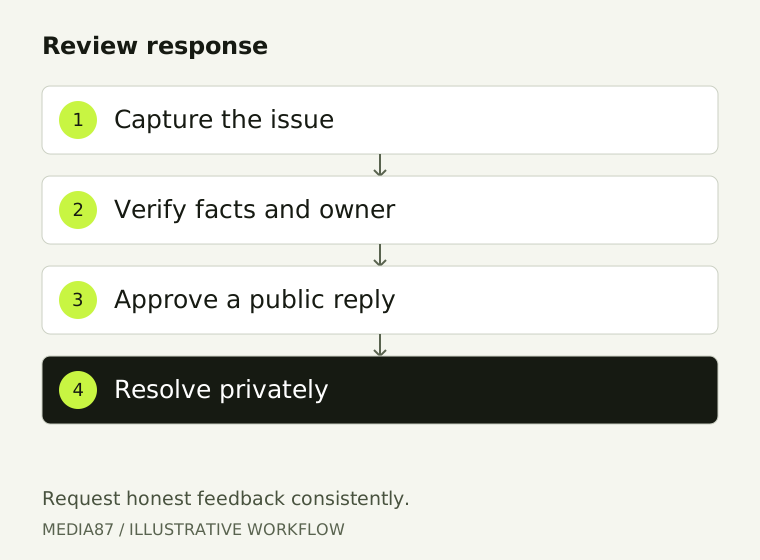
Decide who handles the issue before writing the reply.
Record the review link, the issue raised and the person responsible for checking it. Separate a routine service complaint from a threat, privacy incident or allegation needing specialist advice. This guide is operational guidance, not legal advice.
A marketer may draft the public reply while a service manager checks the facts. Refunds, safety incidents and legal positions need the appropriate owner’s approval; a reply should not commit the business to a remedy that has not been agreed.
Keep the public reply useful and protect privacy.
Acknowledge the concern, explain the appropriate next step and offer a private contact route when details need investigation. Do not publish order information, personal contact details or private correspondence to prove your side of the story.
Google recommends constructive replies and protecting reviewer privacy in its review-response guidance. A review that appears to violate platform rules can be reported through the platform’s process; removal is not guaranteed.
Make the operational change visible to the right people.
Assign the service issue, agree the corrective action and record whether it was completed. Look for recurring causes: unclear expectations, booking problems, slow follow-up or inconsistent handover. A polished response cannot correct a problem that keeps happening.
Where appropriate, publish factual service information or clarify a policy on your website. Avoid presenting generated images, fabricated testimonials or unrelated traffic growth as evidence of recovery.
Ask for honest feedback consistently.
Use a neutral request for eligible customers rather than screening people by their likely rating. Do not offer rewards for positive reviews or ask customers to change or delete criticism in exchange for a benefit. Google’s review guidance prohibits incentives in exchange for reviews.
For businesses managing several profiles, Localena provides a product workflow to discuss for requests, reply drafts and reporting. Confirm supported platforms and approval rules during the demo. Local SEO work can address accurate discovery information alongside customer feedback.
Report what was resolved, not just the star average.
A practical report separates new reviews, unanswered issues, recurring causes and completed corrective actions. Keep identifiable customer details out of marketing reports. Review whether the process is helping customers get a response and whether the underlying service issue is improving.
Bring your profiles, location count and current response process to a Media87 enquiry. Serious legal or regulatory disputes should go to a qualified adviser.
Plan the next step with Media87.
Share your website, current setup and the problem you want to solve. Scope and costs are agreed before work begins.
Questions or corrections? Email hello@media87.com.